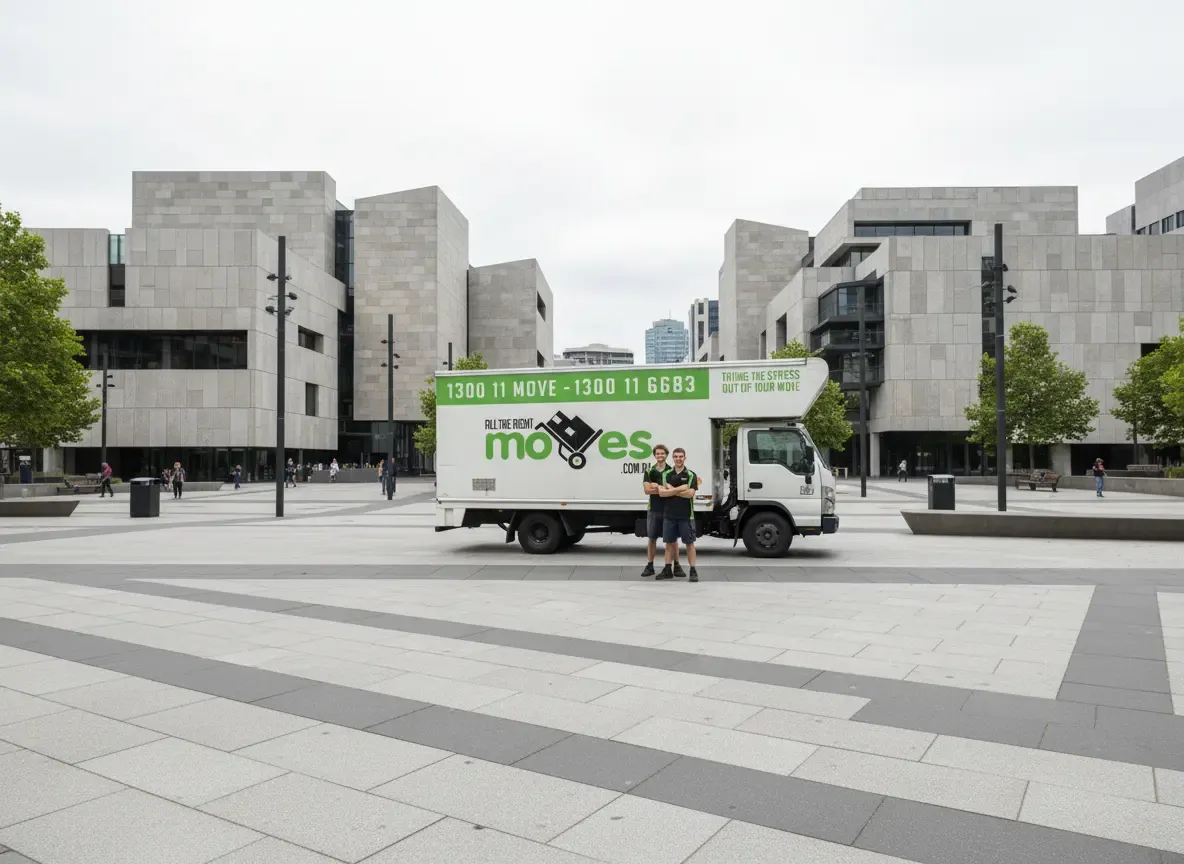
Moving Company Melbourne helps businesses discuss warehouse relocations in Melbourne where boxed inventory, furniture and work areas need transfer between premises. A useful plan starts with an accurate item list, loading dock details and the order in which each area must become operational. Tell us about bulky assets and restricted access early so handling suitability and timing can be assessed.
A warehouse relocation may involve packed cartons, loose office furniture, workbenches and other movable items, subject to an agreed inventory and suitability check. All The Right Moves describes a moving service built around assessing volume and access, wrapping and securing furniture, then loading, transporting and unloading goods. Do not assume that stocked pallet racking, forklifts, powered machinery, dangerous goods or temperature controlled stock can be transported through a standard removalist booking. Those items need specific discussion before any commitment. Picking, stock counts, palletising, equipment isolation, racking dismantling, storage and installation are also separate questions. Confirm what the quoted crew will physically move and what your own staff or contractors must prepare.
Moving with confidence
A practical sequence forwarehouse changeover
01
List the load
Supply both warehouse addresses, your preferred date, a clear inventory and photographs of large or unusual items. Flag stock that must remain accessible until dispatch finishes.
02
Check both sites
Discuss loading dock heights, vehicle access, restricted aisles, stairs, staff movements and the receiving floor plan. The team can assess volume and the proposed truck and crew requirements.
03
Transfer approved items
Once the scope is agreed, the removalist team wraps and secures suitable furniture, loads the accepted goods, transports them and unloads at the new premises.
04
Check the handover
Have a nominated contact direct placement, compare delivered items against your list and raise any concerns before the crew leaves.
Planning your move
How warehouse moving costsare worked out
Warehouse relocation costs depend on what is actually being transported, not just the distance between buildings. All The Right Moves generally describes hourly moving charges, with any travel component explained in the quote. The number and size of movable items, required crew, vehicle capacity and loading distance can affect the work involved. Access can also change the scope: a clear loading bay is different from a narrow service lane or a long carry through active storage areas. Specialist equipment, palletised stock, waiting time and split collections must be discussed separately. Request an itemised explanation of proposed labour, travel and any exclusions; do not assume a fixed price or minimum.
Moving with confidence
When businesses need thistype of move
A warehouse move can arise when a distributor transfers stockholding to larger premises, a local business combines storage sites, or a workshop shifts its non-fixed furniture and supplies. Another common planning scenario is moving back-office contents while warehouse operations continue nearby. These are examples of customer needs, not claims about completed projects. The deciding question is whether each item falls within the removalist's confirmed scope. A full industrial plant relocation or specialist rigging job may need a different provider.
Moving with confidence
Get stock and accessready beforehand
Separate transportable goods from fixed racking, powered equipment and anything requiring licensed trade work.
Prepare an inventory by zone, with approximate quantities, sizes and unusual weights.
Label approved cartons by their destination area without displaying sensitive stock information.
Confirm dock access, truck approach, parking, keys and any site induction requirements with the relevant building contacts.
Nominate a staff member who can answer questions at collection and delivery.
Keep dispatch orders and critical stock apart until the business has decided when they can move.
Identify fragile, high-value or hazardous items for separate suitability and insurance discussions before the booking is accepted.
Planning your move
Protecting movable goods duringthe transfer
The confirmed moving process includes furniture wrapping, securing items for transport, loading and unloading. For warehouse goods, good preparation starts with separating stable, boxed items from loose parts and anything too heavy, fragile or awkward for ordinary removalist handling. Tell the team about uneven weight, protruding components and goods that cannot be tipped. Staff should manage inventory records. Do not treat standard furniture protection as proof that a particular machine, stocked pallet, chemical product or temperature sensitive consignment is suitable. Obtain an explicit decision about unusual items and the necessary preparation before including them on the final load list.
Moving with confidence
Loading docks, shifts anddelivery windows
Warehouse work can be interrupted by operating forklifts, scheduled deliveries, shared dock times and restricted vehicle access. Even when two buildings are close together, the path from storage zone to truck and from truck to receiving bay affects the duration. Confirm whether the warehouse can pause activity, who controls each dock and when the destination can receive goods. If the business needs several movements to avoid disrupting dispatch, ask whether separate runs are available. No completion window should be assumed before the inventory and site access have been reviewed.
Moving with confidence
What to clarify inthe proposed scope
Ask these questions before agreeing to a moving quote:
Which cartons, furniture and other assets are accepted, and which are excluded as specialist freight?
How do loading dock restrictions, long internal carries or waiting periods affect labour charges?
Is the proposed move a single transfer, or can separate collections be discussed?
What packing, equipment disconnection or racking work must our own contractors complete?
What insurance terms apply to business stock and valuable equipment?
Make sure the written scope identifies each site's access details and the items that need separate approval.
Planning your move
Insurance terms forbusiness contents
The Moving Company Melbourne website says insurance cover is included with moves at no extra charge. It does not provide the policy type, insurer, cover limits, exclusions or claims steps in the project source material. Ask for the current wording before booking, especially if the load contains commercial stock or valuable equipment. Confirm whether each proposed item is accepted and what preparation conditions apply; do not assume all business contents are covered.
Planning your move
Discuss your warehousemoving requirements
Tell us your current warehouse address, destination, preferred moving date and a rough list of movable goods. Include loading dock restrictions, operating hours and any heavy or unusual assets. We can discuss the proposed scope and what requires separate confirmation.
Helpful answers
Questions,answered.
Every job is different. These answers cover the practical details customers commonly ask before making a booking.
Can you move stock on pallets?+
Palletised stock needs a separate suitability check. Provide the pallet count, dimensions, estimated weight and details of how the load is secured. A general removalist description does not establish that forklifts, pallet handling or freight services are included in the booking.
Does the move include taking down racking?+
Not automatically. Fixed or heavy duty racking may require specialist dismantling, installation or safety work that is outside an ordinary furniture move. Identify the racking type and whether it is bolted down, then obtain written confirmation of who is responsible before scheduling collection.
Can we keep dispatch running during the move?+
Possibly, but the operating plan needs to be agreed first. Identify orders that must keep moving, the areas the removalist crew can access and any shared loading windows. Ask whether separate collections are feasible; an uninterrupted dispatch schedule should never be assumed.
Who manages the stock count and labels?+
Your business should appoint someone to manage stock records and destination labels. Removalists can use the agreed inventory to identify items for transport, but stock reconciliation, scanning and warehouse management systems are not confirmed inclusions. Keep a separate record of what leaves and arrives.
Are forklifts and powered machines included?+
No specialist machinery service should be assumed. Forklifts, powered conveyors and similar assets raise weight, access, safety and transport questions beyond ordinary office furniture. Provide photographs and specifications so suitability can be assessed, and arrange qualified contractors where disconnection or specialist lifting is required.
Ready when you are
Get a clear quote. Move with confidence.
Tell us about your warehouse relocations melbourne requirements, timing and access. We will help you understand the right next steps for a quote.